
Biography
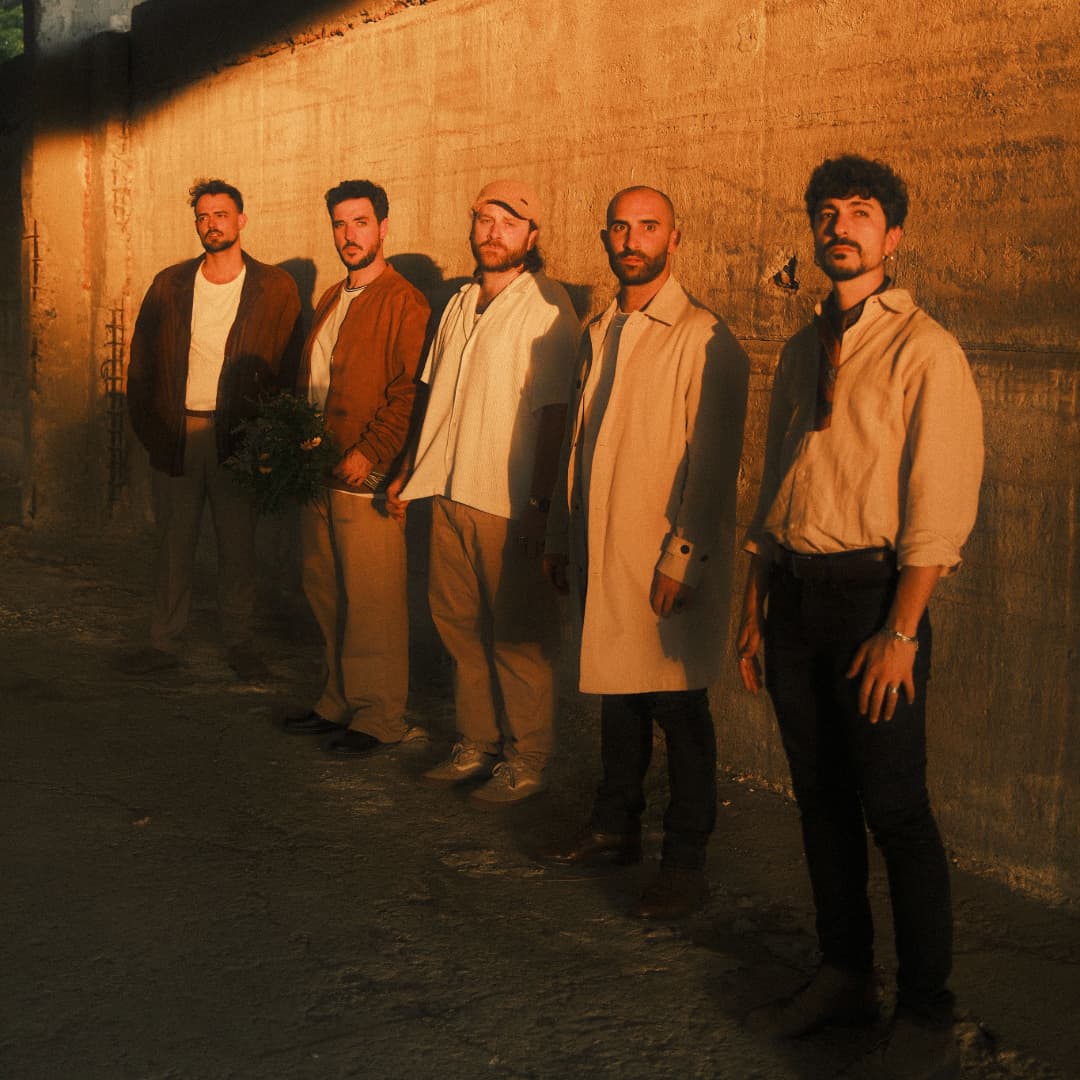
Canastéreo is a Seville-based band moving between alternative rock, neo-psychedelia and a flamenco-rooted sensibility that appears without the need to be overstated. Their music starts from tradition, but never stays still: it stretches it, reshapes it and takes it into a territory of its own, where guitars, immersive atmospheres, an Andalusian pulse and a clear experimental spirit coexist.
The project began in 2018 with Raíces Lunáticas, a first EP where some of the keys to their universe were already starting to appear: the dreamlike, the everyday, the passing of time, nature and a constant search for identity. Later came Pasajes de lo Impuro, a release that helped place the band within an Andalusian scene that understands psychedelia, rock and flamenco as languages that can look each other in the eye.
With Jazmines, released in 2026 by Calaverita Records, Canastéreo opens a new chapter. Produced by Víctor Cabezuelo together with the band, recorded at Estudios La Mina with Raúl Pérez, mixed by Manuel Cabezalí and mastered by Dany Richter, the album consolidates an evolution that had already been taking shape in their latest singles. Across the record, the band crosses rock, neo-psychedelia, Andalusian folklore and electronics with increasing naturalness.
Their songs feel like both an inner journey and a shared celebration. There is light, memory, a desire for change and a very particular way of approaching emotion: sometimes contained, sometimes expansive, always shaped by a sensibility that connects the old with the contemporary.
Canastéreo does not sound like an exercise in style, but like a band in motion. A project that looks towards its roots without standing still in nostalgia, that allows itself to experiment, and that finds in the live setting the perfect place to unfold its full strength: songs that grow, breathe and transform when experienced up close.
Hueco Session #11
Canastéreo recorded a live session at Hueco Studio in October 2026 as part of the Hueco Sessions in Cantillana, near Seville.
Canastéreo at Hueco Studio: roots, psychedelia and five ways of understanding music
Some bands find their sound by following a clearly defined path. Others build it through experimentation, allowing the different influences of their members to come together and find common ground. Canastéreo belongs to the latter.
The band visited Hueco Studio for a new live session, sharing their music in a setting quite different from the venues and festivals where they usually perform. Five musicians, an audience just a few feet away, and an intimate atmosphere where every little detail can be heard and experienced differently.
After the concert, we sat down to talk about their latest album, Jazmines, their creative process, the influences that shape their music, and their connection to Andalusia, which naturally finds its way into their songs.
A conversation about finding your own sound without forgetting everything that brought you there.
Playing up close, feeling supported
The first thing the band highlighted after the concert was the closeness to the audience. Used to playing on larger stages, performing in a studio where you can practically look every person in the eye completely changes the experience.
“Above all, I think we felt really supported.”
For Canastéreo, that proximity allowed them to connect with the audience in a different way. Seeing people’s faces, their reactions, and how each part of a song reaches them transforms the experience of performing live.
Even the way they played had to adapt to the space. The drums, for example, found a different balance than usual, adjusting their intensity to the size of the studio without losing the energy of the performance.
The band acknowledges that every stage has its own charm, from the power of a festival to the connection that emerges in a smaller setting.
At Hueco Sessions, all that energy is concentrated into just a few square metres. There’s barely any distance between the musicians and the audience, making it possible to discover details that sometimes go unnoticed in other environments.
Jazmines: taking control of their own sound
One of the main topics of our conversation was Jazmines, Canastéreo’s latest album.
The record represents an important step in the band’s evolution, not only because of its sound, but also because of the way it was created.
For the first time, the musicians decided to develop their songs much further on their own before entering the recording studio. Demos, arrangements, and many of the production decisions began taking shape in their rehearsal space.
“We’ve started producing things ourselves in the rehearsal room.”
This change gave them more freedom to experiment, try different sounds, and arrive at the studio with a much clearer idea of what they wanted to achieve.
On previous releases, some decisions depended more heavily on people outside the band. With Jazmines, they felt they had greater control over their own musical identity.
“I definitely think it’s Canastéreo’s most mature work.”
That maturity doesn’t mean they’ve found a definitive formula. Instead, they’ve learned to work together more consciously, understanding what they want to communicate and how to make their songs sound the way they imagine them.
And, above all, discovering that there are still plenty of directions left to explore.
Between Foals, Tame Impala and Andalusian roots
When we started talking about influences, the conversation took us in many different directions.
With Jazmines, Canastéreo wanted to move towards a more synthetic sound, giving keyboards a greater role, experimenting with new guitar textures, and exploring a different relationship between instruments and vocals.
Bands like Foals and Tame Impala came up as references, helping to explain some of their approach to alternative rock and contemporary psychedelia.
But reducing Canastéreo to those influences would only tell a small part of the story.
The band consists of five musicians with very different musical tastes. Some feel particularly connected to flamenco, others come from a rock background, while others bring more Anglo-American influences into the mix.
That diversity is precisely one of their greatest strengths.
Rather than trying to make everyone listen to the same music, they share discoveries, introduce each other to new artists, and allow their different perspectives to come together.
Their influences aren’t models to copy, but tools for discovering new possibilities.
And somewhere in the middle of all that, Andalusia inevitably makes its presence felt.
The music we carry with us
One of the most interesting moments of the interview came when we discussed how the place we come from influences the music we make.
Because our musical influences aren’t limited to the records we choose to listen to as adults. There’s also the music we heard at home, at school, at family gatherings, or simply in the places where we grew up.
All of that becomes part of who we are, even when we’re not consciously aware of it.
For Canastéreo, Andalusian music and flamenco have been part of that landscape since childhood.
“We’re huge fans. We love it. We’ve been listening to flamenco since we were kids.”
Throughout Jazmines, there are several nods to that tradition, from references to flamenco lyrics to rhythmic elements that find their place within structures more closely associated with rock.
The band mentions, for example, flamenco influences in songs such as Faraona and Flores.
“There’s an Andalusian cadence running through the entire album.”
What’s interesting is that they don’t feel the need to constantly emphasise that influence or turn it into a label.
It’s simply there.
Canastéreo understands that we live in a time when we have access to practically any music in the world. The boundaries between genres are increasingly blurred, and the possibilities for combining influences are almost endless.
But no matter how much music we discover from other places, something from our own surroundings always finds its way into what we create.
In their case, flamenco coexists with synthesizers, psychedelic guitars, and alternative rock structures without any of those elements needing to dominate the others.
Collaborations that grow naturally from the songs
Another defining feature of Jazmines is the presence of several guest artists.
During the interview, Canastéreo explained that these collaborations weren’t the result of a predefined strategy or a desire to include outside names on the album.
It happened much more naturally.
As the songs began to take shape, they started imagining which voices or musical approaches could bring something different to each one.
In some cases, they had a very clear idea of which artist would fit a particular moment in a composition.
That’s how collaborations with Rocío, Vito, and Víctor Cabezuelo came about, with Víctor also involved in the album’s production process.
“Everything happened very naturally.”
For the band, the important thing was that every collaboration made sense within the song, adding something new without losing its original essence.
Interestingly, when they listened back to the finished album, they realised that these contributions also represented different sides of their musical universe.
Three collaborations that, in a way, reflect the diversity of sounds that coexist within Canastéreo.
Rather than simply featuring guest artists, it was about letting the songs find the people they needed.
Five musicians, one shared song
Canastéreo’s songwriting process has a lot to do with that same philosophy.
Although a song might begin with an individual idea, the creative process is deeply collaborative.
Usually, the starting point is musical: a melody, a riff, a sequence, or an early demo. From there, each member contributes ideas until the song gradually finds its final shape.
“Everyone brings ideas to the table. We share them and work through them together.”
Recently, the band has been working more with loops and production projects, developing songs on the computer before bringing them into a full-band setting.
This approach has allowed them to experiment with different structures and sounds, although they also recognise the importance of recovering some of the spontaneity of playing together from the very beginning.
Going back to a guitar, a voice, and a song that works on its own before building layers of production around it.
Because producing a song is one thing, but composing it is something different, and fundamental.
Whatever the method, the importance of collective creation remains the same.
Each member brings something different. Sometimes it’s a guitar idea, other times a keyboard part, a lyric, or a decision about the arrangement.
And in the end, even if a song started with just one person, it belongs to all five.
That collaborative approach extends beyond the music itself. During the creation of Jazmines, decisions about the album’s artwork and visual identity were also shared among the band.
The idea was for every part of the project to genuinely represent them.
An album you can hold in your hands
Our conversation about Jazmines also led us to its vinyl release.
It was the first time Canastéreo had released their music in this format, and from what they told us, the experience has been particularly special.
The response has been so positive that when they went to pick up some copies to bring to the session, they realised there were very few left.
But beyond the sales, what they value most is the connection that forms around the physical record.
After a concert, someone comes over, shares what they thought of the album, asks for a signature, or simply stays for a chat with the band.
Small moments that turn music into something more than a track playing on a streaming platform.
The vinyl also represents, in a way, all the collective work behind Jazmines: the songs, the production decisions, the artwork, the collaborations, and all the time spent putting the album together.
A way of making something tangible that normally only exists while the music is playing.
Keep creating, keep hitting the road
When we asked about the future, the answer was pretty straightforward.
“We just want people to book us for lots of gigs, please!”
Laughing, Canastéreo made it clear that one of their main goals is to keep bringing Jazmines to new stages and sharing their music with as many people as possible.
But while the album continues its journey, the creative process doesn’t stop.
The band told us they’re going through a particularly productive period, with new ideas and compositions already beginning to take shape in their rehearsal room.
They want to keep exploring, make the most of everything they’ve learned while producing their latest album, and continue developing the sound that increasingly feels like their own.
And, of course, keep travelling together.
Because being in a band is also about that: loading instruments into a van, driving for hours, discovering new places, meeting people, and collecting stories that eventually become part of the project itself.
A place to come together through music
As the interview came to an end, the conversation returned to Hueco Studio.
Canastéreo particularly appreciated the possibility of bringing together a recording studio, a live music space, and a meeting point for musicians and audiences under one roof.
Throughout the session, there was music, food, drinks, and time to spend together away from the stage.
And perhaps that’s one of the most beautiful things about this format: the experience doesn’t end when the last song finishes.
Afterwards come the conversations, the questions, the laughter, and that feeling of having shared something with people who, in many cases, didn’t even know each other a few hours earlier.
Canastéreo’s visit to Hueco Studio left us with a session full of musical nuances and a conversation about the importance of roots, creative freedom, and the value of building something together.
A band that has learned to take control of its sound without losing sight of what each member brings to the table. A band that looks towards Andalusia without turning its back on influences from around the world. And one that understands music as a space for connection, experimentation, and discovery.
Because, in the end, perhaps finding your own identity isn’t about choosing a single path, but learning how to bring together all the different ones that led you here.