
A realistic guide to what a recording quote includes, which choices affect the cost and how to make better use of every studio hour.
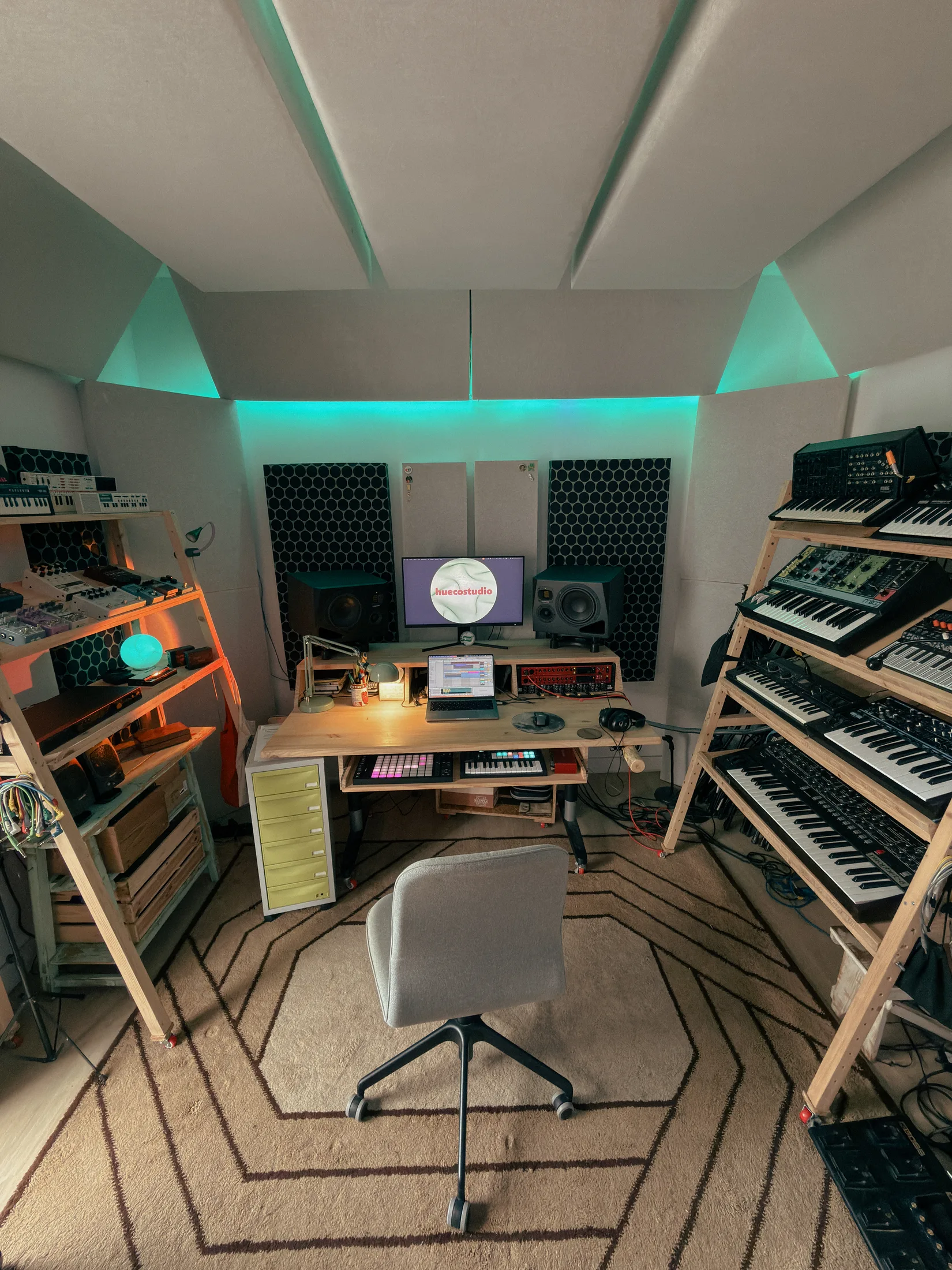
How much does it cost to record a song in a studio? It sounds like a simple question, but there is no single figure that applies to every project. Recording vocals over a finished instrumental, capturing a singer-songwriter live and producing a full band track all involve very different amounts of time, preparation and creative input.
The most useful way to estimate a budget is not to look at the hourly rate alone. First define the result you need: clean recordings, full production, a release-ready mix, or the complete process through mastering. At Hueco Studio, based in Cantillana near Seville, we shape the session around the actual stage of each song.
Why there is no single price for recording a song
The final cost is determined by three connected elements: studio time, technical and creative labour, and the complexity of the production. Two songs of the same length can require completely different budgets.
One artist may arrive with a finished instrumental and only need two hours of vocal recording. Another may bring a guitar-and-voice demo that still needs arrangement, sound selection, additional instruments, editing, mixing and mastering. Both projects involve “recording a song”, but the scope is not comparable.
A professional quote should therefore state which tasks are included and what will be delivered. A low headline price may exclude editing or mixing, while a more complete quote may cover production support, revision rounds and a final master prepared for distribution.
The main factors that affect the recording budget
Before booking, review the following factors. They have the greatest effect on the number of hours and the kind of service required:
- The state of the song: a finished arrangement is faster to record than an idea that still needs structure, lyrics or instrumentation.
- The number of musicians and instruments: every additional source requires setup, checking, recording and often editing.
- The recording method: tracking a band live can preserve energy and reduce overdubs, but it needs careful technical planning; recording in layers offers more control but often takes longer.
- The level of production: choosing sounds, programming drums, building textures and directing performances are part of music production, not simply recording.
- Editing: compiling takes, tightening timing, removing noise and tuning vocals can become a substantial part of the work.
- Mixing and mastering: these are separate stages and should be clearly identified in the quote.
- Revisions and deliverables: confirm how many revision rounds, instrumental versions, stems or alternative files are included.

Typical sessions for different kinds of projects
The examples below help illustrate the process. They are not fixed packages because preparation and artistic expectations vary from one project to another.
- Vocals over a finished instrumental: session preparation, microphone selection, lead takes, harmonies and basic editing. A well-prepared singer may complete this in a short session.
- Singer-songwriter: voice and guitar or piano may be recorded together to preserve the performance, or separately for greater control. The choice changes both the sound and the schedule.
- A single produced from a demo: this can include pre-production, sound selection, recording, programming or additional instrumentation, editing, mixing and mastering.
- Full band: drums, amplifiers, direct inputs, vocals, monitoring and communication all need planning. A full day usually gives the band enough space to work without rushing.
- Music for film, advertising or podcasts: the brief may also require exact durations, synchronisation, cut-downs and specific usage rights.
When a project combines several stages, it is usually clearer to request a complete proposal through our services page rather than adding studio hours without knowing which tasks will be required.
Should you book by the hour or by the day?
Our studio rental options are designed for different workflows. Hourly booking is practical for vocals, overdubs, attended editing, mix revisions or very specific tasks. It also suits artists who know their process well and can estimate the required time accurately.
A half day or full day is normally more efficient for drums, bands, intensive production and sessions that involve setup. It gives everyone time to make technical decisions without treating every adjustment as lost time. A resident pack works well for regular weekly sessions, while artists who want to create over several days with accommodation can choose a residential recording stay.
How to reduce the cost without reducing the quality
Saving money in the studio does not mean rushing or accepting a weaker result. It means arriving with the important decisions made and choosing the right booking format.
1. Confirm the structure, key, tempo and lyrics before the session unless pre-production is part of the booking.
2. Rehearse to a click and record a basic demo so problems appear before studio time begins.
3. Send instrumentals, references and technical notes in advance so the session can be prepared.
4. Check strings, drumheads, cables, batteries and tuning. Basic maintenance prevents expensive interruptions.
5. Define the priorities: performance, organic sound, precision, experimentation or speed.
6. Listen critically and avoid collecting endless takes once a convincing performance already exists.
Reviewing the available equipment and instruments in advance also prevents unnecessary transport and helps you decide which personal items are genuinely important.

What to include when requesting a quote
Useful information leads to a useful estimate. You do not need a perfect project deck; simply describe the work honestly and clearly.
- A demo or private link, even if it was recorded on a phone.
- The number of songs, musicians and instruments.
- Which parts are finished and where you need support.
- The required services: recording, production, editing, mixing, mastering or video content.
- Your preferred working dates and intended release date.
- Sonic references and the purpose of the song.
- An indicative budget, when available, so the studio can suggest a realistic approach.
With this information, the project can be planned as an hourly session, a full day, a phased process or a complete production. Tell us about it through the Hueco Studio contact page.
The right price follows the right process
A song does not become better simply because more hours are added. It improves when preparation, environment and technical decisions all support the performance and the idea behind it.
Before comparing quotes, check what each one includes, what the studio experience is like and whether the working method suits you. The aim is not to book the largest possible block of time. It is to create a process in which time, creativity and budget all work in favour of the song.
Frequently asked questions
Can a complete song be recorded in one day?
Yes, particularly when the arrangement and parts are fully prepared. A production with many instruments, detailed editing or substantial creative changes may need more than one session.
Are mixing and mastering included in studio rental?
Not automatically. Rental provides access to the room and equipment; engineering, production, mixing and mastering services should be confirmed in the quote.
Can I bring my own instrumental and record only the vocals?
Yes. Send the files in advance, ideally as WAV files with the tempo included and without heavy limiting on the master.
Is it cheaper to book by the hour or by the day?
It depends on the task. Hourly booking is efficient for focused work; a day is generally better when setup, several musicians or a longer creative process are involved.
Next step
Would you like a realistic estimate for your song? Send a demo and explain what you need. We will suggest a clear workflow without asking you to book stages your project does not require.